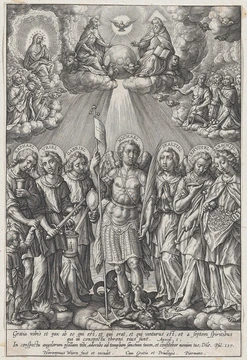
Abaddon
Biblical angel of destruction and abyss, king of locusts.

MangakaMaiden · CC BY 2.0
Abaddon (Hebrew: אֲבַדּוֹן, "destruction" or "doom") and its Greek counterpart Apollyon (Koine Greek: Ἀπολλύων, "Destroyer") are biblical terms that refer both to a place of ruin and to a specific angelic being. In the Hebrew Bible, the word "abaddon" denotes a bottomless pit and is frequently paired with Sheol, the abode of the dead. In the New Testament's Book of Revelation, an angel named Abaddon appears as the king of a swarm of locusts; his name is first given in Koine Greek as Ἀβαδδών, then rendered as Ἀπολλύων, or Apollyon.
The Hebrew root אבד (’ăḇāḏ) means "to perish" or "to destroy," and "abaddon" is an intensive form of this verb, appearing 184 times in the Hebrew Bible. The Septuagint, an early Greek translation, renders "Abaddon" as "ἀπώλεια" (apṓleia), while "Apollyon" is the active participle of the Greek verb ἀπόλλυμι (apóllymi), "to destroy."
In the Hebrew Bible, the term appears six times in the Masoretic Text, always as a place of destruction or the realm of the dead, alongside Sheol. For example, Job 26:6 states, "Sheol is naked before Him; Abaddon has no cover." Job 28:22 personifies it: "Abaddon and Death say, 'We have only a report of it.'" Other verses include Job 31:12, Psalm 88:11, Proverbs 15:11, and Proverbs 27:20.
In Second Temple era texts, such as the Thanksgiving Hymns found among the Dead Sea Scrolls, "the Sheol of Abaddon" and "torrents of Belial that burst into Abaddon" are mentioned. The Biblical Antiquities (misattributed to Philo) treat Abaddon as a place, not a person, and it is also considered one of the compartments of Gehenna. By extension, the name can refer to an underworld abode of lost souls.
In rabbinical literature, some legends identify Abaddon as a realm within Gehenna where the damned lie in fire and snow, one of the places Moses visited.
The New Testament provides the first known depiction of Abaddon as an individual entity rather than a location. Revelation 9:11 describes him as "a king, the angel of the bottomless pit; whose name in Hebrew is Abaddon, and in Greek Apollyon; in Latin Exterminans." In the Old Testament, Abaddon and Death are sometimes personified, as in Job 28:22 ("Abaddon and Death say, 'We have heard a rumor of it with our ears'") and Proverbs 27:20 ("Sheol and Abaddon are never satisfied"). Proverbs 6:32, though not using the noun "abaddon" in Hebrew, is rendered in the Septuagint wi
- field
- Biblical and theological figure
- known_for
- Angel of the abyss and king of locusts in Revelation; personification of destruction in Hebrew Bible
- nationality
- Not applicable (biblical figure)
Lore & Background
In the Hebrew Bible, the term abaddon appears six times in the Masoretic Text, meaning destruction or the realm of the dead, and is accompanied by Sheol. Passages include Job 26:6 ('Sheol is naked before Him; Abaddon has no cover'), Psalm 88:11, and Proverbs 15:11. The Septuagint renders 'Abaddon' as 'ἀπώλεια' (apṓleia). In Second Temple era texts, such as the Thanksgiving Hymns found among the Dead Sea Scrolls, it speaks of 'the Sheol of Abaddon' and 'torrents of Belial [that] burst into Abaddon'. Rabbinical literature identifies Abaddon as a realm where the damned lie in fire and snow, one of the places in Gehenna that Moses visited.
Reader's Guide
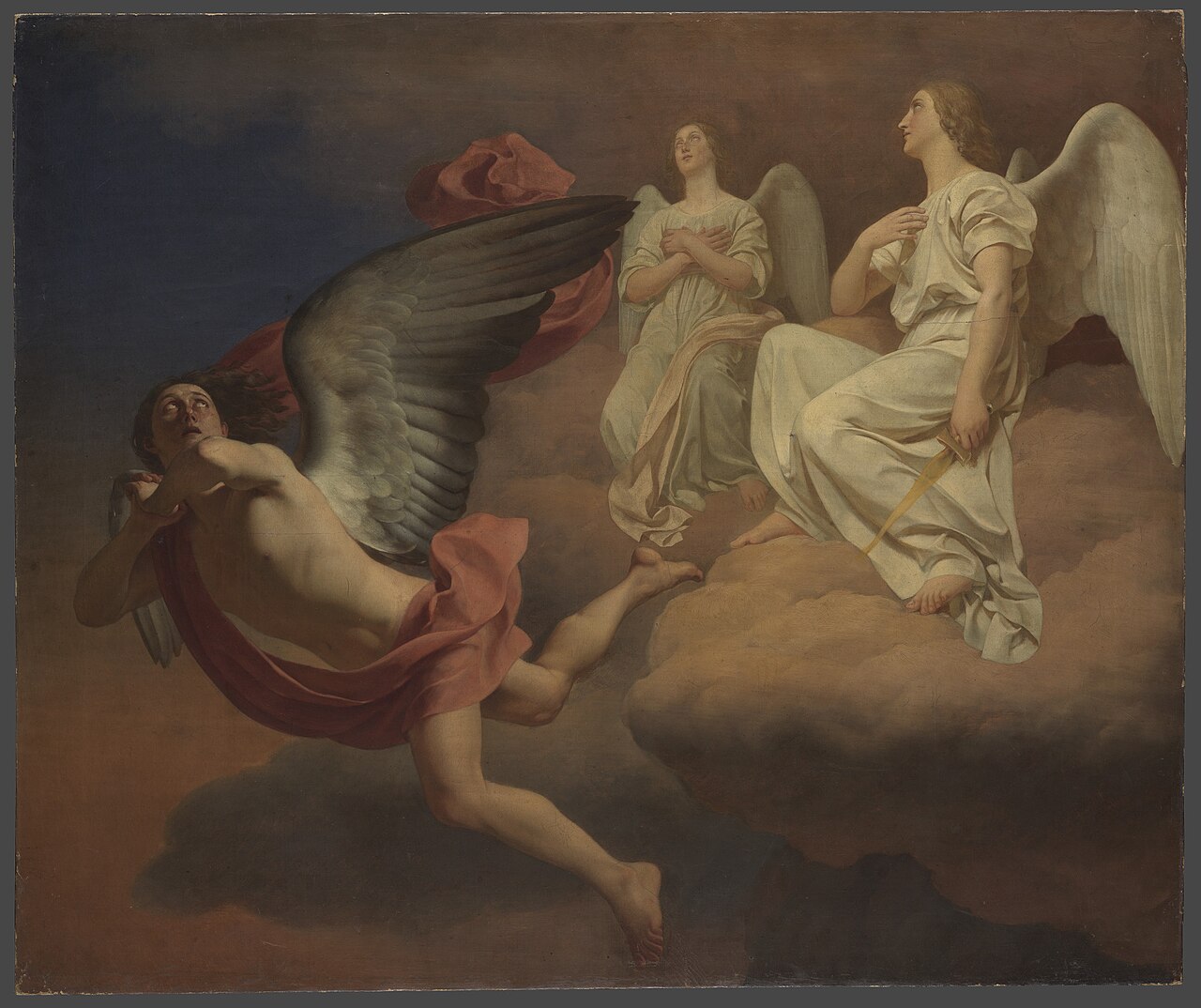
The New Testament contains the first known depiction of Abaddon as an individual entity instead of a place. In Revelation 9:11, Abaddon is described as 'Destroyer', the angel of the Abyss, and king of a plague of locusts resembling horses with crowned human faces, women's hair, lions' teeth, wings, iron breast-plates, and a tail with a scorpion's stinger that torments for five months anyone without the seal of God. The symbolism leaves the identity open to interpretation: Protestant commentator Matthew Henry believed Abaddon to be the Antichrist, while the Jamieson-Fausset-Brown Bible Commentary and Henry Hampton Halley identified the angel as Satan. In contrast, The Interpreter's Bible states Abaddon is an angel of God performing destruction at God's bidding, citing Revelation 20:1-3. Jehovah's Witnesses also cite that passage to conclude Abaddon is another name for Jesus after his resurrection. In medieval Christian literature, such as the 11th-century epic poem 'Song of Roland', Abaddon is depicted as part of a fictional trinity alongside Muhammad (Mahound) and Termagant, attributed to the religious practices of Muslims. Mandaean scriptures mention the Abaddons as part of the World of Darkness, and apocryphal texts like the Acts of Thomas name Abaddon as a demon or the devil himself.
Did You Know?
- The Hebrew term abaddon appears six times in the Masoretic Text of the Hebrew Bible.
- In Revelation 9:11, Abaddon is described as the king of an army of locusts with features including crowned human faces, lions' teeth, and scorpion tails.
- The Vulgate and Douay–Rheims Bible add the Latin note 'Exterminans' (destroyer) not present in the Greek text.
- In the 3rd-century Gnostic text Acts of Thomas, Abaddon is the name of a demon or the devil himself.
Gallery


Frequently Asked Questions
Who is Abaddon in the Bible?
Abaddon is a biblical figure who serves as the king of a demonic locust swarm in the Book of Revelation. The same Hebrew word also functions as a term for a bottomless pit of ruin, frequently mentioned alongside Sheol in the Old Testament.
What does Abaddon do in Revelation?
In Revelation 9, Abaddon is identified as the ruler of a swarm of locusts that emerge from the opened abyss to torment humanity. He is described as an angel who ascends from the pit and is given authority over these creatures for a limited period.
What is the difference between Abaddon and Apollyon?
They are not two separate beings but the same figure rendered in two languages: Abaddon is the Hebrew name meaning 'destruction,' while Apollyon is the Koine Greek equivalent meaning 'Destroyer.' Revelation presents the name first in its Greek transliteration and then clarifies it with the Greek translation.
What does the name Abaddon mean?
The Hebrew word abaddon derives from a root meaning 'to perish' or 'to destroy,' so the name essentially translates to 'destruction' or 'doom.' In the Hebrew Bible it can refer both to a state of utter ruin and to a bottomless pit associated with the dead.
Is Abaddon an angel or a demon?
The text of Revelation explicitly calls Abaddon an 'angel' who rises from the abyss, yet he commands what are widely understood as demonic locusts. This makes him one of the few figures in Scripture labeled an angel while clearly operating in an adversarial, destructive capacity.
More in Angels in Christianity 1-24
Spotted an error? Know more?
This is a living reference — every entry is fact-audited, and reader corrections feed straight into our audit queue. Suggest an edit · See this site's audit record