Aevum
Temporal mode of angels and saints between eternity and time.

Stéphane Gallay from Laconnex, Switzerland · CC BY 2.0
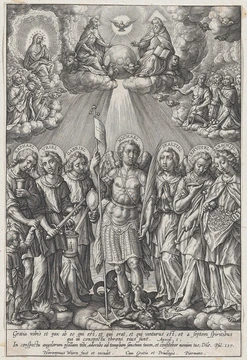
The aevum, also called aeviternity, is a concept in scholastic philosophy describing the temporal mode of existence experienced by angels and by the saints in heaven. It is understood as a state logically between the timeless eternity of God and the temporal experience of material beings, sometimes referred to as 'improper eternity' or 'participated eternity.'
- field
- Scholastic philosophy, philosophy of time
- known_for
- Describing the intermediate temporal mode between eternity and time, applied to angels, souls, and celestial bodies
- etymology
- From Latin aevum ('age', 'aeon', 'everlasting time') and Greek αἰών (eternity in atemporal sense); aeviternity from Medieval Latin aeviternitas
Lore & Background
The concept of aevum developed from earlier philosophical distinctions. Plato and Aristotle recognized only two modes of duration—Time and Eternity—but the Neoplatonist Simplicius of Cilicia argued for a third mode to describe celestial bodies and souls that are everlasting yet change. Augustine of Hippo, in his exegesis of Genesis, also recognized a mode distinct from time and eternity, viewing heaven and earth as existing in a participated eternity before time began.
By the early 13th century, a doctrine of three measures of duration—eternity, sempiternity (or perpetuity), and time—was developing at the University of Paris. The Summa attributed to Alexander of Hales used this middle measure for angels, souls, and celestial spheres. Albertus Magnus, in De quattuor coaequaevis, distinguished aevum from eternity, noting that even something without beginning or end has a mode distinct from God's eternity. Thomas Aquinas, in his Summa theologica, identified aevum as the measure of beings that recede less from permanence, such as heavenly bodies and angels.
Later, Theodoric of Freiberg proposed five measures of duration, including superaeternitas, aeternitas, aevum, aeviternitas, and time. In the 14th century, Berthold of Moosburg and William of Ockham rejected the concept, with Berthold recognizing only eternity and time, and William holding that time alone is a measure of duration.
Reader's Guide
The aevum represents a significant development in medieval philosophy's attempt to categorize modes of existence beyond simple time and timelessness. It provided a framework for understanding beings—such as angels, human souls, and celestial spheres—that are created and thus have a beginning, yet are not subject to the same kind of change as material entities. The concept bridges Platonic and Aristotelian thought, incorporating Neoplatonic insights from Simplicius and Christian theology from Augustine. Its refinement by Albertus Magnus and Thomas Aquinas shaped scholastic discussions of duration, influencing later debates on the nature of time and eternity. Although rejected by some later thinkers like Ockham, the aevum remains a key term in historical philosophy of time, illustrating how premodern scholars grappled with the metaphysical status of spiritual and celestial beings. Its legacy persists in theological contexts, such as Frank Sheed's description of aeviternity as the proper sphere of the human soul after death.
Did You Know?
- The word aeviternity comes from the Medieval Latin neologism aeviternitas.
- Before the 13th century, the term aevum was used synonymously with eternity.
- Thomas Aquinas identified the aevum as the measure of beings that 'recede less from permanence of being'.
- Theodoric of Freiberg distinguished five measures of duration, including superaeternitas and aeviternitas.
Linguistic Roots and the Invention of a Distinct Term
The word aevum traces back to Latin, where it originally carried meanings such as age, aeon, or everlasting time. Its deeper root lies in the Greek word αἰών, which conveyed eternity in an atemporal sense. For centuries before the thirteenth century, aevum was simply used as a synonym for eternity itself, with no meaningful distinction between the two concepts. The separation came gradually as medieval thinkers needed more precise vocabulary to describe layered modes of existence. The related English term aeviternity derives from aeviternitas, a Medieval Latin neologism coined specifically to capture this intermediate state of duration. The fact that a new word had to be invented signals how genuinely novel the philosophical distinction was: scholars could not simply repurpose existing language and were forced to forge a new term for a way of being that was neither fully timeless nor fully temporal. This linguistic evolution mirrors the broader intellectual shift in which the medieval mind grew increasingly comfortable with graduated categories of existence rather than a simple binary of eternal versus temporal.
The Long Intellectual Lineage
The idea that something could exist in a mode of duration distinct from both time and pure eternity did not emerge in a single moment. Plato and Aristotle each recognized two modes of duration—time and eternity—but disagreed on where the soul belonged: Plato placed it in time, Aristotle in eternity. The Neoplatonist Simplicius of Cilicia then argued that a third mode was necessary to account for celestial bodies and souls that are everlasting yet still undergo change. Augustine of Hippo, in his commentary on Genesis, independently identified a similar intermediate state, describing formless matter as existing in a participated eternity before time began. By the early thirteenth century, a threefold doctrine of duration—eternity, sempiternity, and time—was taking shape at the University of Paris, appearing in the Summa attributed to Alexander of Hales. Albertus Magnus then gave the concept its first systematic treatment in De quattuor coaequaevis, explicitly distinguishing aevum from both eternity and sempiternity. Thomas Aquinas later refined the definition in his Summa theologica, and Theodoric of Freiberg expanded the taxonomy to five distinct measures of duration in his De mensuris.
Defining the Middle Measure of Duration
At its core, aevum describes a way of existing that is neither the absolute timelessness of God nor the bounded, changeable duration of material creatures. Aquinas captured this by describing aevum as the measure of beings that come closest to unchanging existence—beings whose being does not consist in change and who are not themselves the subject of change, yet who have change attached to them, either in actuality or in potentiality. He pointed to the heavenly bodies, which in medieval science were considered unchanging in nature though variable in position, and to angels, whose nature is unchangeable but whose choices are mutable. Albertus Magnus sharpened the distinction further by contrasting aevum with sempiternity: even a thing with no beginning and no end would still differ from God's eternity, because eternity is pure actuality while aevum is always actual but only the actuality of some potency. Theodoric of Freiberg later carved out even finer distinctions, placing aevum above the aeviternitas of celestial bodies and below the aeternitas of divine intelligences, giving angels a beginning and everlasting existence with no change in substance but change in accidents.
Rejection, Revival, and the Soul's Proper Sphere
Not every medieval and early modern thinker accepted the aevum as a legitimate category. In the fourteenth century, Berthold of Moosburg rejected it outright, insisting that only two measures of duration existed: eternity and time. William of Ockham went even further, denying that eternity could properly be called a measure at all and holding that time was the sole genuine measure of duration. For these thinkers, the intermediate concept was either redundant or incoherent. Yet the idea refused to die. In the twentieth century, Frank Sheed revived aeviternity in his book Theology and Sanity, arguing that it constitutes the proper sphere of every created spirit, including the human soul. In his view, at death the soul's distracting relation to matter and its temporal constraints ceases, freeing it to experience its own aeviternity. This reframing connects the medieval technical term to a deeply personal theological claim: that the soul's ultimate home is not a frozen eternity but a living, everlasting mode of existence that belongs to it by nature.
Gallery


Frequently Asked Questions
What is Aevum in Christian angelology?
Aevum (or aeviternity) is not a named angel but a scholastic philosophical term describing the unique mode of temporal existence that angels and the blessed in heaven experience. It occupies a logical middle ground between God's absolute, timeless eternity and the sequential time that material creatures live through.
How does Aevum differ from ordinary time?
In scholastic thought, aeviternity is sometimes called 'improper eternity' or 'participated eternity' because it borrows qualities from both pure eternity and created time. Angels perceive their whole existence as a unified whole rather than as a chain of successive moments, yet they still exist within a created order rather than outside all duration.
Who uses the concept of Aevum in Christian theology?
The term belongs to the scholastic philosophical tradition, particularly in medieval discussions of the philosophy of time and the nature of angelic and celestial existence. It was employed by thinkers working within the Latin scholastic framework to articulate how non-material created beings relate to duration.
What is the etymology of Aevum?
The word derives from the Latin aevum, meaning 'age,' 'aeon,' or 'everlasting time,' and is connected to the Greek αἰών (aiōn), which carries a sense of eternity in a non-successive, atemporal way. The extended form 'aeviternity' comes from the Medieval Latin aeviternitas.
Why is Aevum important for understanding angels in Christianity?
It provides the philosophical vocabulary for explaining how angels can be eternal in a meaningful sense without being identical to God's own achronal existence. Without this intermediate category, one would struggle to articulate how created spiritual beings persist through time without being subject to the same sequential flow that governs physical matter.
More in Angels in Christianity 1-24
Spotted an error? Know more?
This is a living reference — every entry is fact-audited, and reader corrections feed straight into our audit queue. Suggest an edit · See this site's audit record