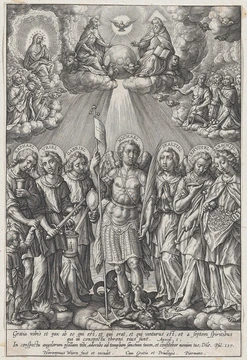
Ángel arcabucero
Angels armed with arquebuses in Andean colonial art.

Unknown author · Public domain
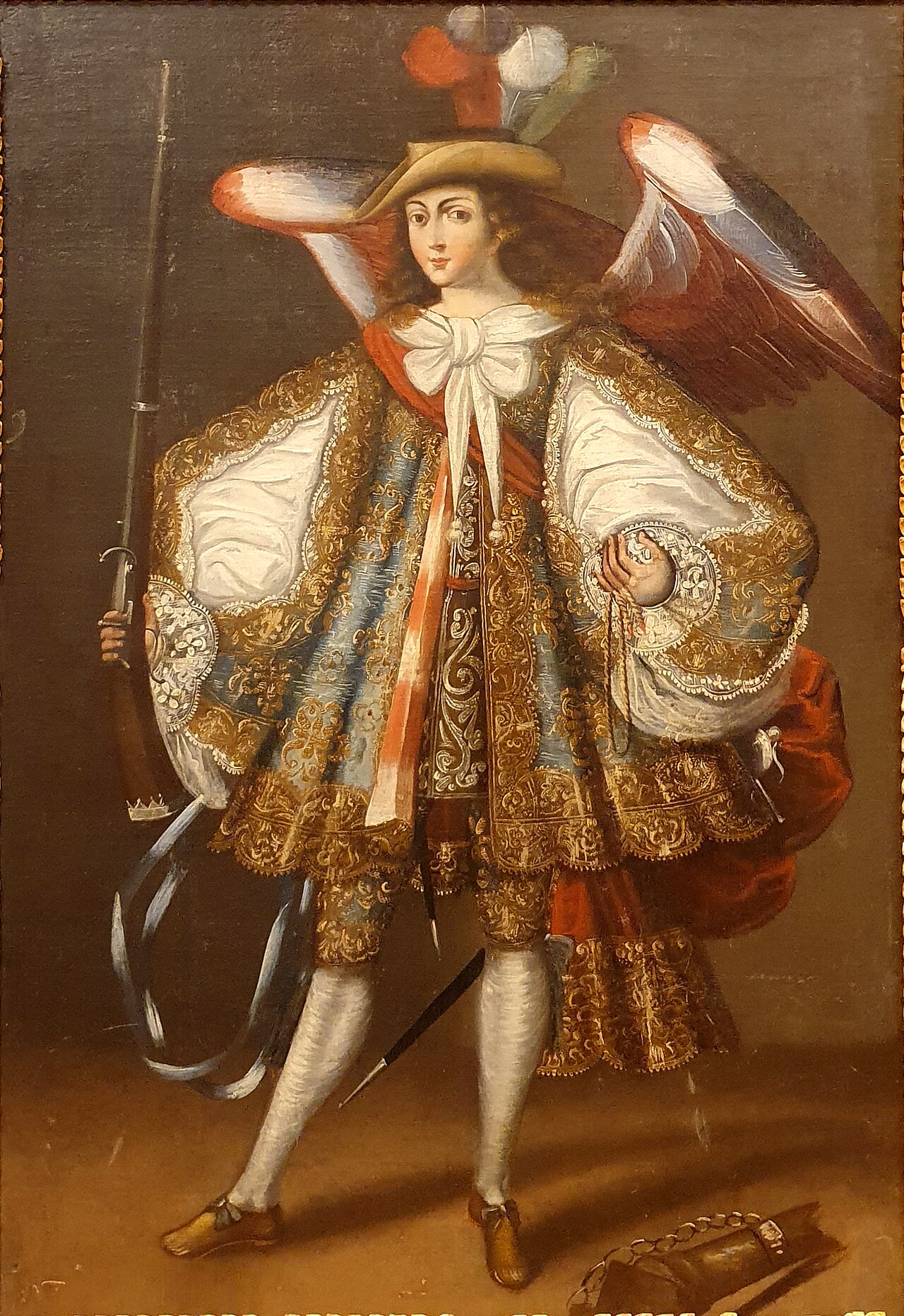
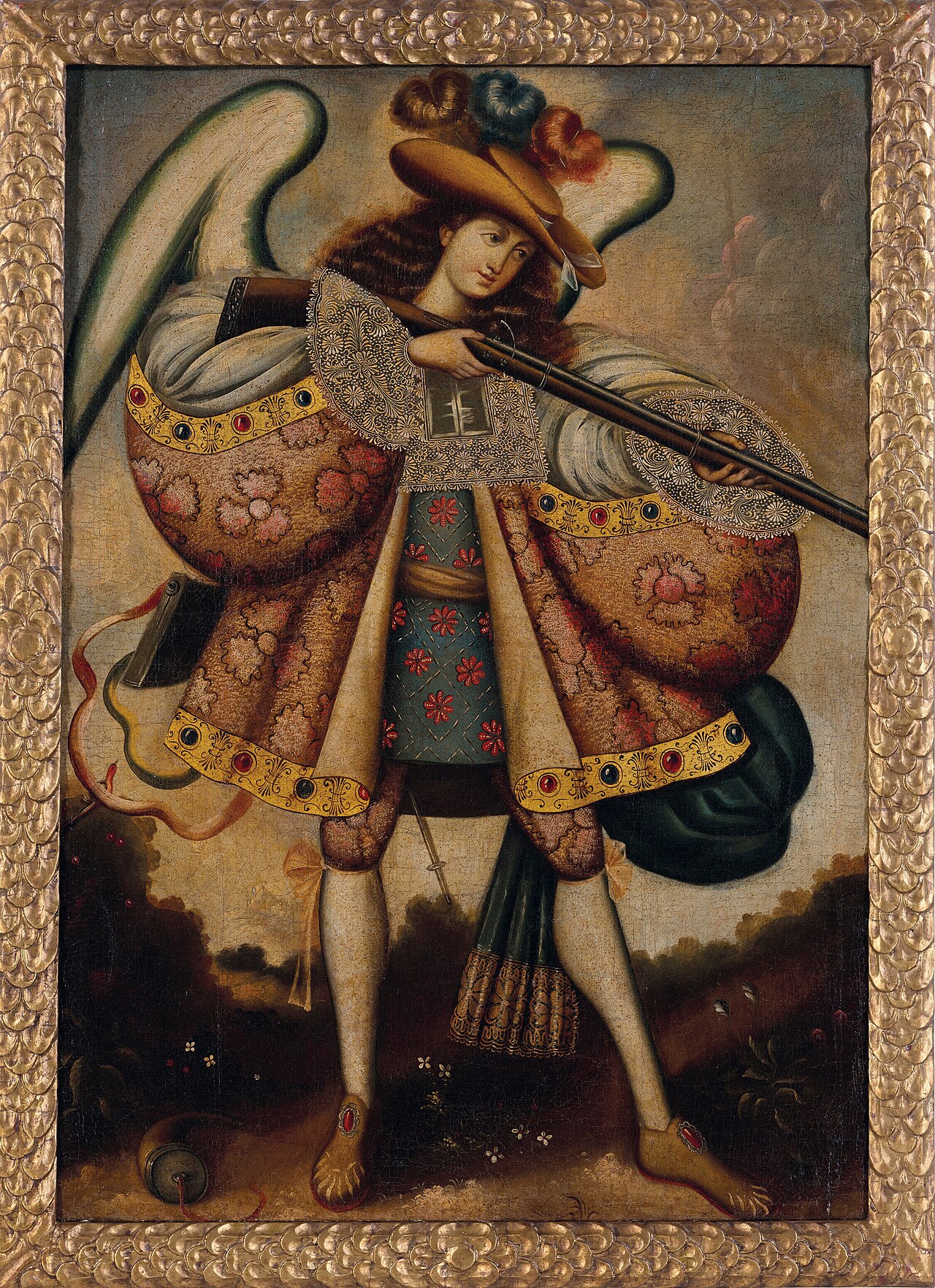
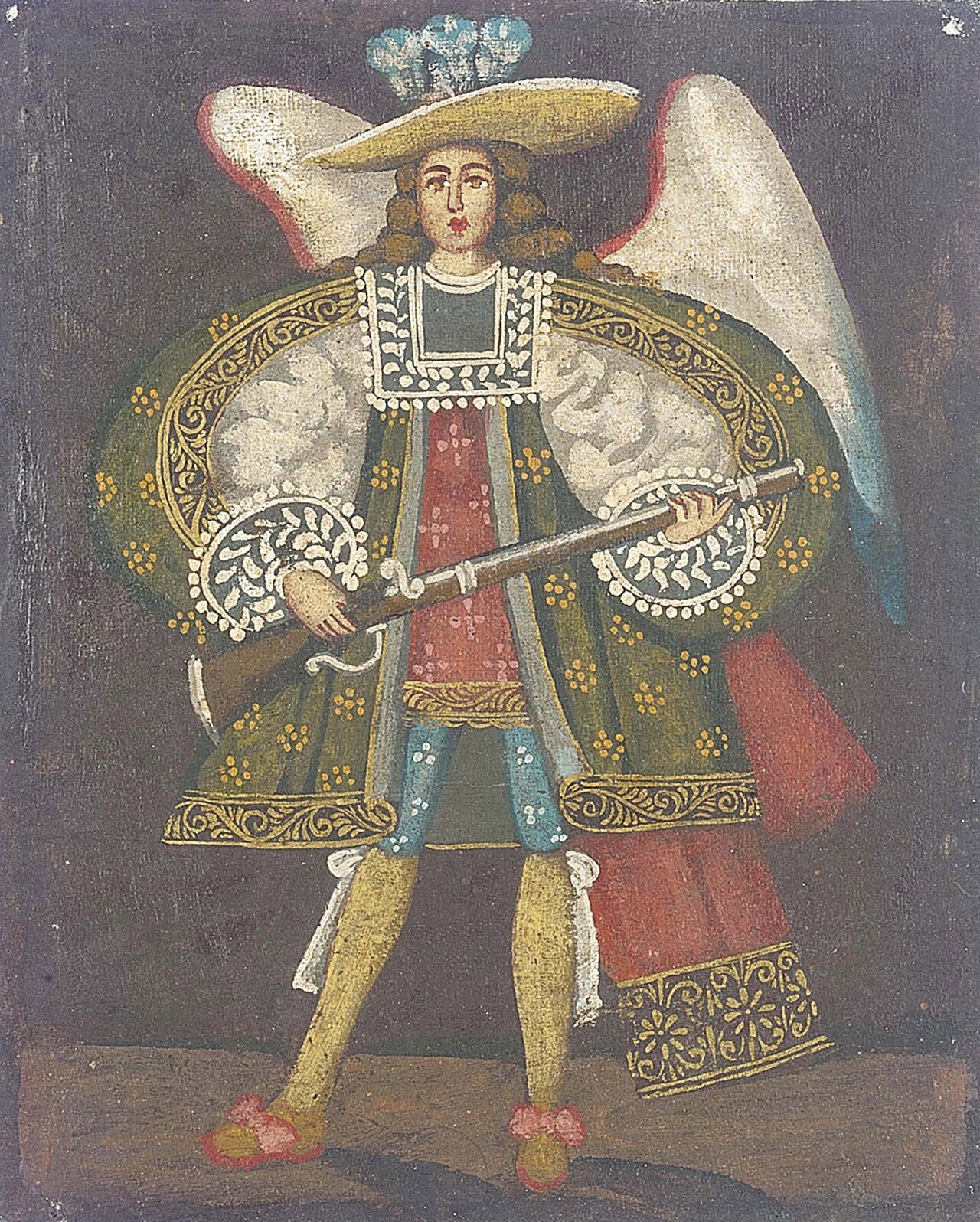
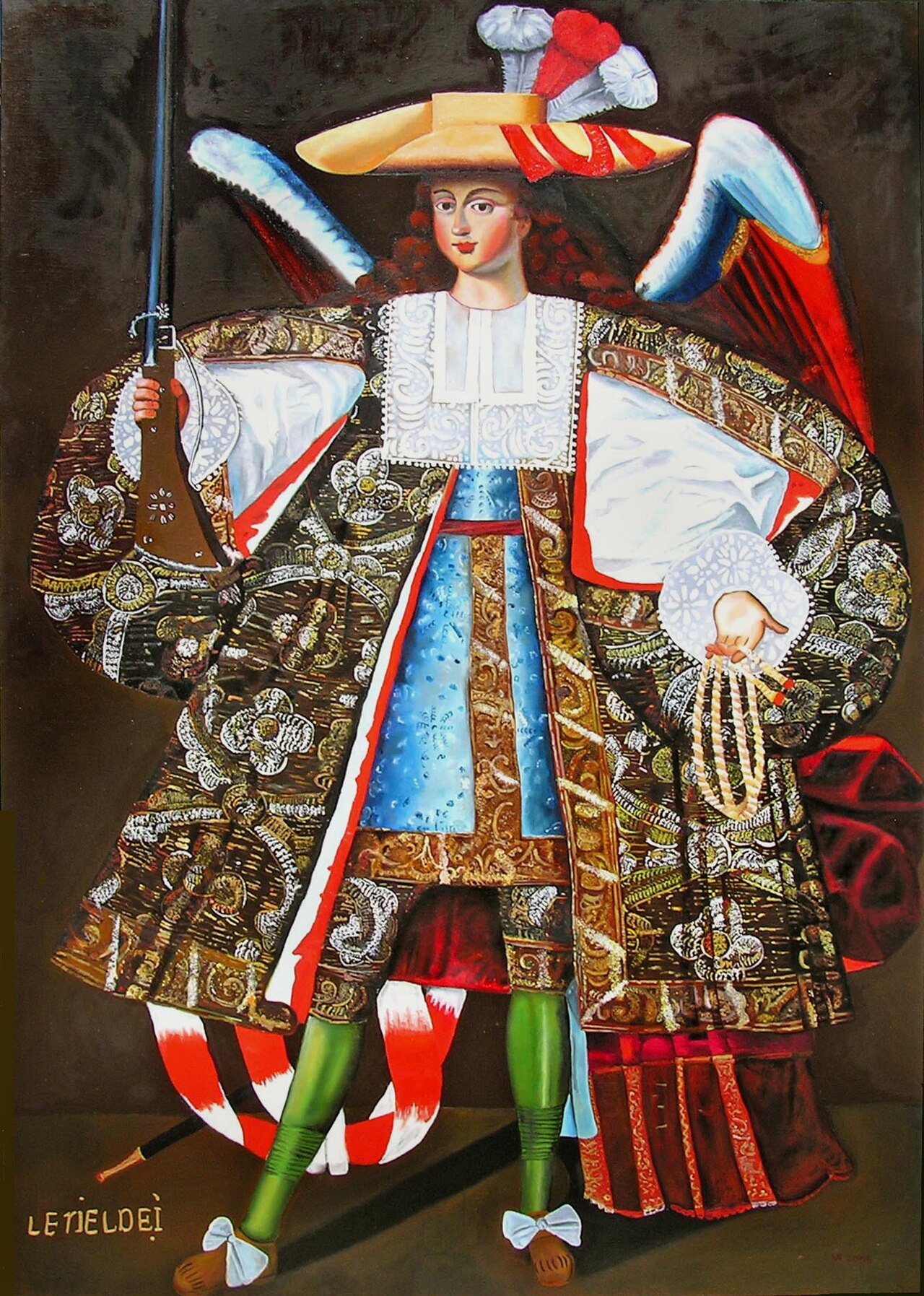
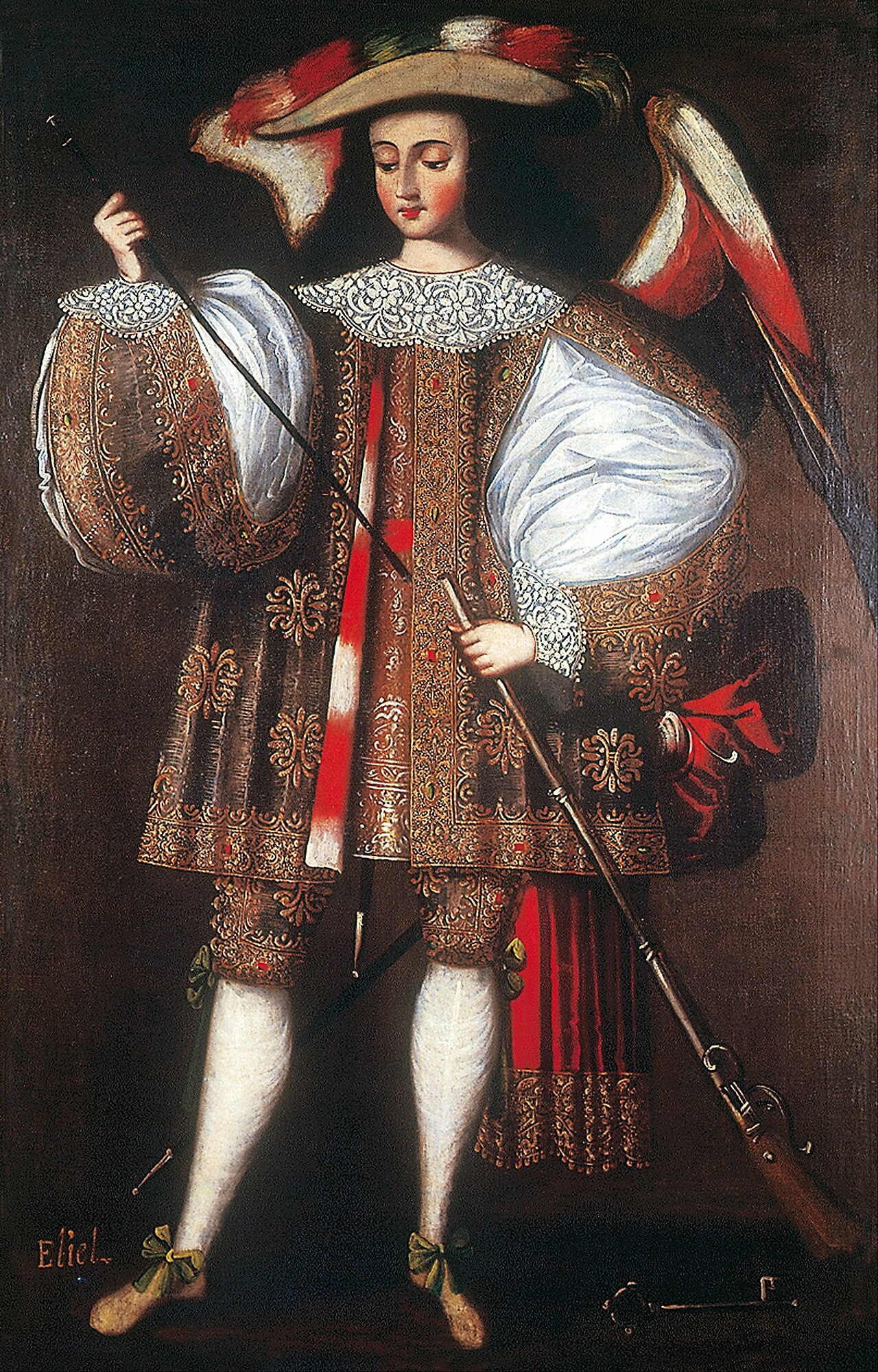
An Ángel arcabucero (arquebusier angel) is an angel depicted with an arquebus, an early muzzle-loaded firearm, instead of the traditional sword of martial angels, and dressed in clothing inspired by that of Criollo and Andean nobles and aristocrats. This style arose in Peru in the second half of the 17th century and was especially prevalent in the Cusco School. The genre likely originated in the Collao region, near Lake Titicaca, and was based on Spanish and Dutch engravings, including those from the 1607 Exercise in Arms by Jacob de Gheyn II.
- field
- Colonial painting and sculpture
- known_for
- Depicting angels with arquebuses in Andean Baroque style
- origin
- Peru, second half of 17th century
- region
- Cusco School, Collao region near Lake Titicaca
Lore & Background
The Ángel arcabucero style arose in Peru in the second half of the 17th century, especially within the Cusco School. According to Kelly Donahue-Wallace, the genre probably originated in the Collao region near Lake Titicaca and was actually based on Spanish and Dutch engravings. Some of these European prints depicted apocryphal archangels condemned by the Church, but such motifs survived in the Andes. Another probable source for the angels' poses, corresponding to military exercises of the period, were engravings from the 1607 Exercise in Arms by Jacob de Gheyn II.
Reader's Guide
The Ángel arcabucero holds significance as a fusion of European religious iconography and Andean cultural identity. In his work Ángeles apócrifos de la América Virreinal (1992), Ramón Mujica Pinilla noted the link between these angels and certain winged warriors from the pre-Hispanic pantheon. The good reception among indigenous people may be due in part to the ease with which they could identify these winged warriors with their ancient gods and heroes. At the beginning of the 18th century, demand for such paintings grew rapidly across the Viceroyalty, leading to large artistic workshops, mostly indigenous, being established. Today, these works are found in churches and museums in Peru, Bolivia, northern Argentina, Mexico, Spain, and the New Orleans Museum of Art. The Church of Calamarca in Bolivia contains the most complete existing series, including the notable Asiel Timor Dei by the Master of Calamarca (around 1680). A preserved series of ornate polychromed sculptures from 17th-century Potosí is now located in the Peyton Wright Gallery in New Mexico.
Did You Know?
- The style arose in Peru in the second half of the 17th century and was especially prevalent in the Cusco School.
- The Church of Calamarca, about 60 km from La Paz, Bolivia, contains the most complete existing series of ángeles arcabuceros.
- Some European prints that inspired the genre depicted apocryphal archangels condemned by the Church.
- A series of ornate polychromed sculptures from 17th-century Potosí is now in the Peyton Wright Gallery in New Mexico.
Origins and Visual Identity
The arquebusier angel emerged as a distinctive iconographic type in Peru during the latter decades of the seventeenth century, becoming one of the most recognizable figures associated with the Cusco School of painting. Rather than wielding the sword that had long signified martial virtue in depictions of warrior angels, this figure grips an arquebus—an early muzzle-loaded firearm—signaling a shift in how divine combat was imagined in the colonial Andes. The angel's attire further distinguishes the type: instead of the flowing robes typical of European angelic imagery, the figure is clothed in garments drawn from the wardrobes of Criollo and Andean nobility and aristocracy. This blending of local elite dress with a European weapon created a hybrid visual language that felt simultaneously sacred and deeply rooted in the social hierarchies of the Viceroyalty. The style flourished most vigorously in Cusco, where workshops developed a consistent visual vocabulary for these armed celestial beings, establishing a regional tradition that would soon spread far beyond the city's walls.
Pre-Hispanic Echoes and European Sources
Scholars have traced the appeal of the arquebusier angel to deep pre-colonial resonances. In his 1992 study Ángeles apócrifos de la América Virreinal, Ramón Mujica Pinilla drew a direct line between these winged, armed figures and the winged warriors that appeared in the pre-Hispanic pantheon of the Andes. He suggested that indigenous viewers of the era readily recognized in the painted angels a continuation of their own ancient gods and heroes, which may explain the genre's strong reception among native communities. Kelly Donahue-Wallace proposed that the type likely took shape in the Collao region near Lake Titicaca, where artists drew upon Spanish and Dutch engravings circulating in the colonies. Some of those European prints featured apocryphal archangels—figures the Church had officially condemned—yet those very motifs persisted in Andean artistic practice. Additionally, the dynamic poses of the angels appear to echo the military drill illustrations in Jacob de Gheyn II's 1607 Exercise in Arms, lending the figures a sense of disciplined, choreographed action.
Workshops and Viceroyalty-Wide Demand
By the early eighteenth century, appetite for Cusqueño religious paintings had expanded dramatically across the entire Viceroyalty. Commissions poured in from Lima, Upper Peru (present-day Bolivia), Chile, and northern Argentina, and a significant share of those commissions specifically called for depictions of arquebusier angels. To meet this surging demand, large-scale artistic workshops were organized, and the workforce was predominantly indigenous, reflecting the deep entrenchment of this iconographic tradition within native artistic communities. Hundreds of paintings bearing these armed angels were produced and then shipped across vast distances to churches and private collections throughout the Spanish-speaking territories. The scale of production and distribution underscores how the arquebusier angel had moved well beyond a local Cusqueño curiosity to become a widely requested devotional image. The genre's commercial success also reveals the economic vitality of Andean workshops, which operated as substantial enterprises capable of fulfilling orders from multiple viceroyal jurisdictions simultaneously, cementing the type's place in the broader visual culture of colonial Latin America.
Surviving Collections and Global Presence
The most celebrated surviving ensemble of arquebusier angels is housed in the Church of Calamarca, roughly sixty kilometers from La Paz in Bolivia. This series, considered the most complete extant group of the type, includes the Asiel Timor Dei attributed to the Master of Calamarca, painted around 1680, and these works are regarded as outstanding exemplars of the genre. Beyond Bolivia, Cusco School paintings of these angels can be found in numerous cities across Peru, additional churches in Bolivia, and sites in northern Argentina. In Mexico, Spain, and the United States, both churches and museums hold examples, with the New Orleans Museum of Art among the institutions preserving such works. A notable collection of ten arquebusier angels resides in the San Francisco de Padua Church in Uquía, nestled in Argentina's Quebrada de Humahuaca. The tradition also extended into sculpture: a set of richly ornate, polychromed angel figures carved in seventeenth-century Potosí was plundered at some point and now sits in the Peyton Wright Gallery in New Mexico, testifying to the genre's reach across media and continents.
Gallery
Frequently Asked Questions
What is an Ángel arcabucero?
An Ángel arcabucero is a martial angel figure from colonial Andean art who carries an early muzzle-loaded firearm called an arquebus instead of the conventional sword. These angels are typically dressed in garments reflecting the fashion of Criollo and Andean aristocratic classes.
Where and when did the Ángel arcabucero tradition emerge?
This artistic genre first appeared in Peru during the latter decades of the 1600s, with its roots traced to the Collao region close to Lake Titicaca. It went on to become a signature motif of the Cusco School of painting and sculpture.
What visual sources inspired the depiction of Ángel arcabucero figures?
Andean artists drew on European engravings showing soldiers handling early firearms, particularly Spanish and Dutch prints. A key reference was Jacob de Gheyn II's 1607 work 'Exercise in Arms,' which illustrated soldiers with muzzle-loaded guns.
How does an Ángel arcabucero differ from typical martial angels in Christian art?
Rather than wielding a sword as is standard for warrior angels, the arcabucero angel is armed with an arquebus, reflecting the military technology of the colonial period. Their attire also mirrors the clothing of local Andean and Criollo nobility rather than generic medieval or classical garb.
Why is the Ángel arcabucero considered significant in colonial art?
It represents a distinctive fusion of European military iconography with Andean and local aristocratic aesthetics, producing a uniquely Peruvian Baroque style. The genre serves as a defining feature of the Cusco School and demonstrates how colonial artists reshaped imported religious themes to fit their own cultural context.
More in Angels in Christianity 1-24
Spotted an error? Know more?
This is a living reference — every entry is fact-audited, and reader corrections feed straight into our audit queue. Suggest an edit · See this site's audit record