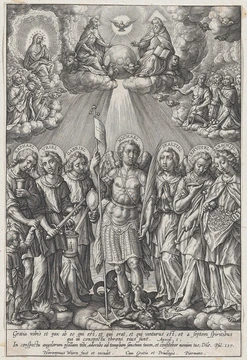
Angel of the Lord
A divine messenger speaking as God in the Hebrew Bible.

Vyacheslav Kirillin · CC BY-SA 4.0
The Angel of the Lord (or an angel of the Lord) is a figure that appears repeatedly in the Tanakh, acting on behalf of the God of Israel. The Hebrew term *mal’āḵ YHWH* (מַלְאַךְ יְהוָה), meaning "messenger of Yahweh," shows up 65 times in the Hebrew Bible. It can be translated as either "the angel of the Lord" or "an angel of the Lord." The King James Version usually goes with "the angel of the Lord," though it sometimes uses "an angel of the Lord." The Septuagint, the Greek translation of the Old Testament, varies: in Genesis 16:7–11, for instance, it first uses the phrase without the Greek article (an angel of the Lord), then later uses the article (the angel of the Lord), following anaphoric usage.
A related term is "angel of God" (*mal'akh Elohim*), which appears 12 times (two of those in plural). Another expression, "Angel of the Presence," occurs only once, in Isaiah 63:9. In the New Testament, the phrase "angel of the Lord" (ἄγγελος Κυρίου) appears several times. In one case (Luke 1:11–19), the angel is named Gabriel, though described simply as "an" angel of the Lord.
In the Hebrew Bible, the word "angel" just means "messenger" and can refer either to a heavenly being delivering a message from God or to a human messenger. But the Angel of the Lord stands apart: this angel speaks as God in the first person and accepts glory, while other angels refer to God in the third person and humble themselves. Examples include Genesis 16:7–14, where the angel appears to Hagar and speaks as God in the first person, and Hagar later identifies "the LORD that spoke to her" as "The God Who sees." In Genesis 22:11–15, the angel appears to Abraham and refers to himself as God in the first person. In Exodus 3:2–4, the angel appears to Moses in a flame, and God speaks from the flame in the first person, with the text seeming to conflate the two. In Numbers 22:22–38, the angel meets Balaam, and Balaam identifies the angel as delivering God's word. In Judges 2:1–3, the angel appears to Israel. In Judges 6:11–23, the angel appears to Gideon, and Gideon fears for his life because he has seen the angel face to face—similar to other instances where people fear they will die after seeing God. In Judges 13:3–22, the angel appears to Manoah and his wife, telling them to offer a burnt offering to the LORD, and Manoah later thinks he and his wife will die because they "have seen Go
- Hebrew term
- מַלְאַךְ יְהוָה (mal’āḵ YHWH)
- Occurrences in Hebrew Bible
- 65 times
- Related term
- Angel of God (mal'akh Elohim), 12 times
- Related expression
- Angel of the Presence, once (Isaiah 63:9)
- New Testament term
- ἄγγελος Κυρίου (angelos kuriou)
- Key appearances
- Hagar, Abraham, Moses, Balaam, Gideon, Manoah and his wife, Zechariah
Lore & Background
The term 'angel of God' (mal'akh Elohim) occurs 12 times, including in Genesis 31:11 where the angel tells Jacob 'I am the God of Bethel,' and in Exodus 14:19 where the angel leads the camp of Israel. The New Testament uses 'angel of the Lord' (ἄγγελος Κυρίου) multiple times, with one instance in Luke 1:11–19 where the angel identifies himself as Gabriel. Interpretations vary: some see the angel as a theophany or manifestation of God, while others view it as a distinct angel. Philo identified the angel with the Logos, and early Church Fathers like Tertullian saw such appearances as preludes to the Incarnation, while Augustine and others held it was merely an angel with God dwelling in him.
Reader's Guide
The Angel of the Lord holds significance as a figure that blurs the line between a divine messenger and God himself, appearing throughout the Hebrew Bible in key theophanic encounters. The ambiguity—whether the entity is an angel or YHWH—has prompted diverse theological interpretations, from early Jewish and Christian thinkers to modern scholars. The term's translation varies across versions, with the King James Version often capitalizing 'Angel' in Old Testament references, while most modern versions do not. The figure appears in foundational narratives: to Hagar, Abraham, Moses, Gideon, and Manoah, often speaking as God and eliciting fear of death from those who see him. In the New Testament, the angel of the Lord appears in the Gospels and Acts, with one instance naming Gabriel. The figure's legacy lies in its role as a bridge between the transcendent God and human experience, raising questions about divine manifestation and the nature of revelation.
Did You Know?
- The Hebrew term מַלְאַךְ יְהוָה occurs 65 times in the Hebrew Bible.
- In Genesis 16:13, Hagar identifies the angel as 'The God Who sees.'
- The Septuagint sometimes uses the Greek article and sometimes does not when translating the phrase.
- In Luke 1:11–19, the angel of the Lord is named Gabriel.
Linguistic Identity & the Translational Debate
The Hebrew phrase mal'akh YHWH—literally "messenger of Yahweh"—appears sixty-five times across the Hebrew Bible, making it one of the most frequently encountered divine designations in the Tanakh. Yet translators have long wrestled with a single grammatical detail: whether the definite article belongs. The King James Version predominantly renders it as "the angel of the Lord," reserving the indefinite "an angel of the Lord" for rarer instances. The Septuagint, the ancient Greek translation, shifts between the two forms, sometimes including the Greek article and sometimes omitting it, as seen in Genesis 16 where the first mention lacks the article but subsequent ones carry it. Modern translations such as the NASB, RSV, and ESV generally avoid capitalizing "angel," treating the phrase as a common noun. Related expressions broaden the picture further: "angel of God" (mal'akh Elohim) surfaces twelve times, two of them plural, and the singular "Angel of the Presence" appears just once in Isaiah 63:9. This web of terminology keeps the entity's precise identity deliberately open to interpretation.
Defining Narrative Appearances in the Hebrew Bible
Across the Hebrew Bible, the angel of the Lord shows up in some of the most pivotal scenes of Israel's story. In Genesis 16, the figure appears to Hagar in the wilderness, speaks in the first person as God, and prompts her to name the speaker "The God Who sees." In Genesis 22, the same entity calls out to Abraham at the binding of Isaac, again using first-person divine speech. At the burning bush in Exodus 3, the text seems to blur the line entirely: the angel appears in the flame in verse 2, then God speaks from that flame in verse 4, both in the first person. Balaam encounters the angel on the road in Numbers 22 and recognizes the speaker as delivering God's word. Gideon, in Judges 6, fears for his life after seeing the angel face to face—a reaction the text parallels with those who have seen God directly. Manoah and his wife in Judges 13 similarly believe they will die because they have "seen God." In each case the angel speaks as the Lord himself, setting this figure apart from every other messenger in the Tanakh.
Theological Distinctions & Interpretive Traditions
What sets the angel of the Lord apart from every other angelic figure in the Hebrew Bible is a striking grammatical choice: this entity consistently refers to itself as "I" and "the Lord," speaking in the first person as God. By contrast, other angels throughout the Tanakh always address the Lord in the third person, humbly deflecting any glory. This distinction has fueled centuries of interpretive debate. Some readers take the figure at face value as a messenger. Others, following the Hellenistic Jewish philosopher Philo of the first century, see the angel as an earthly manifestation of the God of Israel. Still others read the appearances through a Christological lens, identifying the figure as a pre-incarnate appearance of Jesus Christ. The Septuagint translators, working within a Greek idiom, sometimes rendered the phrase with the article and sometimes without, suggesting the Hebrew original may simply mean "an angel of God." The KJV and NKJV capitalize "Angel" in the definite form to signal a unique identity, while most modern translations keep the word lowercase, leaving the question deliberately unresolved.
New Testament Continuity & the Name Gabriel
The phrase does not end with the Hebrew Bible. In the New Testament, the Greek equivalent angelos kuriou appears in a scattering of passages across Matthew, Luke, John, Acts, and Revelation, covering scenes from the annunciation to the resurrection to the opening of prison cells. English Bibles continue the same translational ambiguity, rendering the phrase as either "an angel of the Lord" or "the angel of the Lord" depending on the version. One particularly notable instance occurs in Luke 1:11–19, where the angel who appears to the priest Zacharias in the temple identifies himself by name as Gabriel, yet is still described with the indefinite article as "an" angel of the Lord. References in Acts 12:11 and Revelation 22:6 to "his angel" or the Lord's angel can also be read as pointing to the same tradition. The continuity from the Tanakh into the New Testament suggests that early Jewish and Christian communities inherited the figure as a living, recurring presence in the divine narrative rather than a one-time event.
Gallery



Frequently Asked Questions
Who is the Angel of the Lord?
The Angel of the Lord is a divine messenger in the Hebrew Bible who acts and speaks on behalf of Yahweh, often in a way that makes it difficult to distinguish between the messenger and God Himself. Rather than being one specific named angel, the figure functions as a recurring theophanic presence throughout the Tanakh.
How many times does the Angel of the Lord appear in the Hebrew Bible?
The phrase mal'āḵ YHWH occurs 65 times across the Hebrew Scriptures, making it one of the most frequently invoked divine figures in the Tanakh. A related but distinct term, mal'akh Elohim ('angel of God'), shows up 12 additional times.
What is the original Hebrew term for the Angel of the Lord?
It is מַלְאַךְ יְהוָה (mal'āḵ YHWH), literally 'messenger of Yahweh.' Translators must decide between the definite reading 'the angel of the Lord' and the indefinite 'an angel of the Lord,' and different versions like the KJV and the Septuagint handle that choice inconsistently from passage to passage.
Which biblical characters encounter the Angel of the Lord?
Major appearances include the visits to Hagar in the wilderness, Abraham, Moses at the burning bush, Balaam on the road, Gideon in the field, Manoah and his wife, and Zechariah. These encounters span the patriarchal narratives through the prophetic books.
How does the Angel of the Lord differ from a typical angel in Scripture?
Ordinary angels usually report God's words in the third person, but the Angel of the Lord frequently speaks in the first person as the deity being represented, effectively collapsing the gap between messenger and sender. This makes the figure function almost as a visible manifestation of Yahweh rather than a subordinate created being.
More in Angels in Christianity 1-24
Spotted an error? Know more?
This is a living reference — every entry is fact-audited, and reader corrections feed straight into our audit queue. Suggest an edit · See this site's audit record