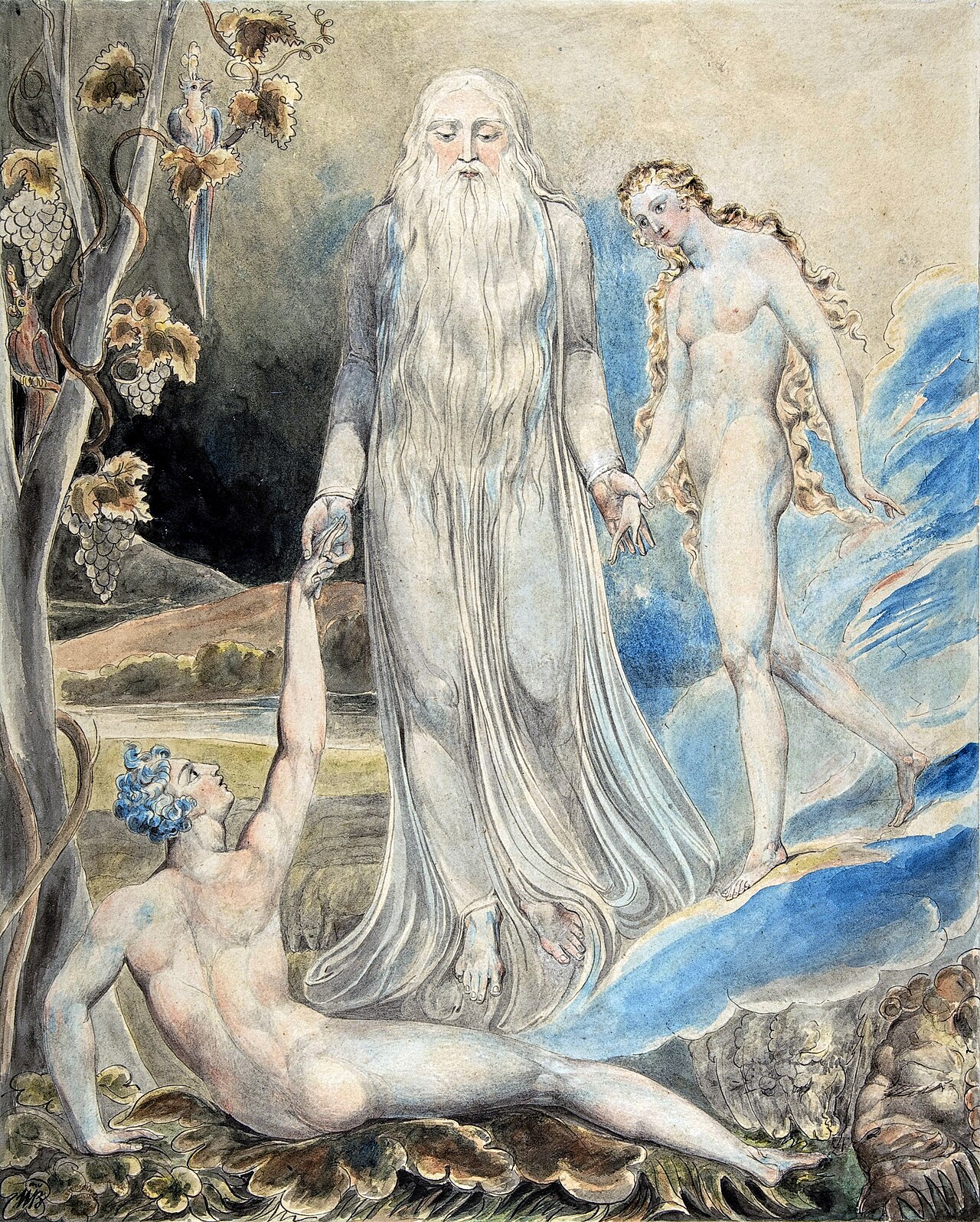
Angel of the Presence
Entity in Isaiah 63:9, seen as angel or God himself.

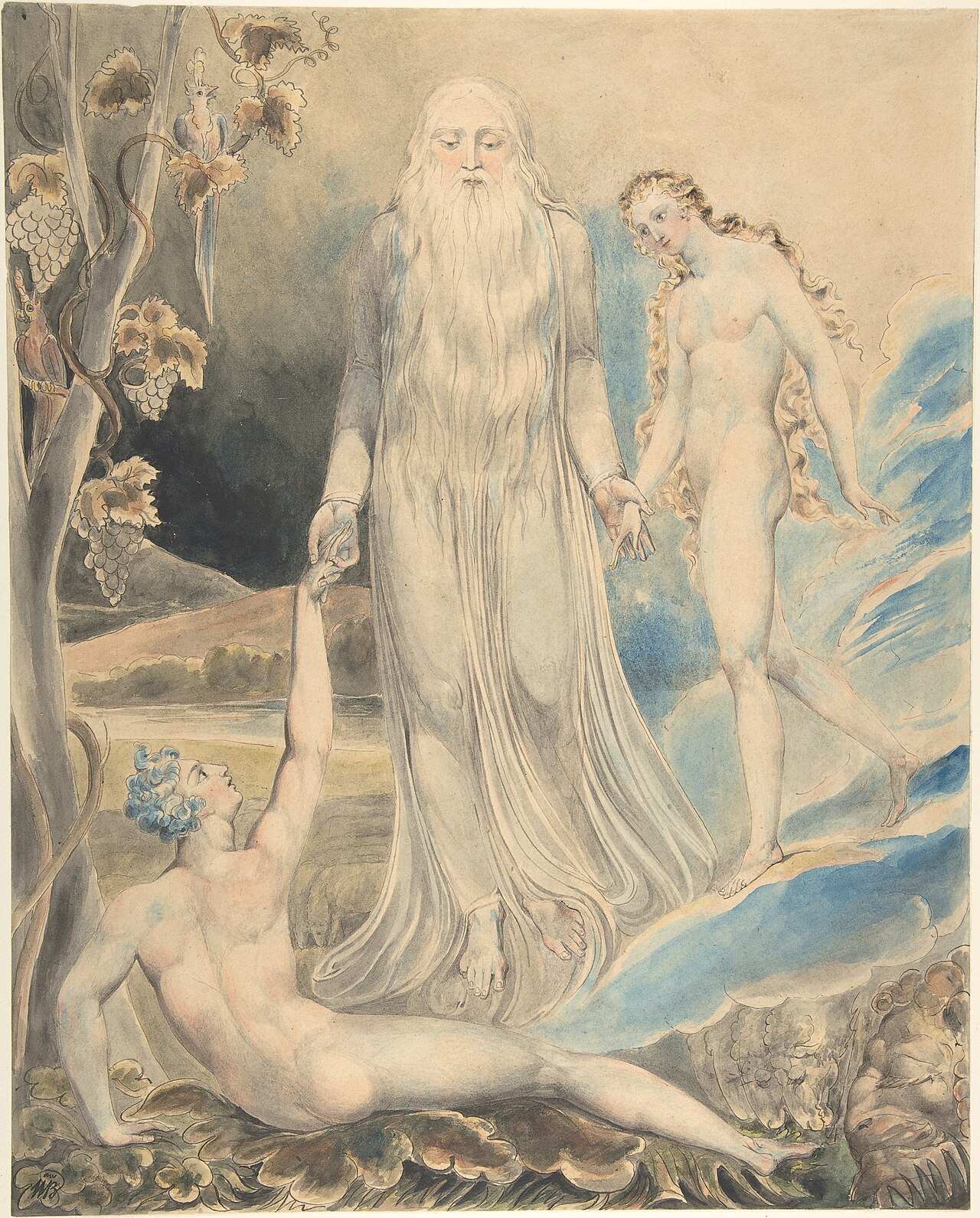
William Blake · Public domain
The Angel of the Presence (Hebrew: Mal'akh HaPanim, מלאך הפנים) or Angel of his presence (Hebrew: Mal'akh Panav, מַלְאַךְ פָּנָיו) is an entity in certain Christian and Jewish traditions, variously considered angelic or identified with God himself. The term appears in the Book of Isaiah (63:9), where it states that God saved Israel with 'the angel of his presence,' and the Septuagint translation interprets this as a direct reference to God, not a created angel.
- field
- Theology, Angelology
- known_for
- Appearing in Isaiah 63:9 as the agent of God's salvation; identified in some traditions with God himself or with angels such as Uriel, Phanuel, or Michael
- tradition
- Christianity, Judaism (Second Temple period)
- source_texts
- Book of Isaiah, Book of Jubilees, Testament of Judah, Second Book of Enoch, Book of Tobit
Lore & Background
In the Book of Isaiah (63:9), the Angel of his Presence is described as saving Israel throughout its history, with God sharing in the nation's distresses. The Septuagint translation of Isaiah explicitly states that this was not an ambassador or angel, but the Lord Himself (αὐτὸς κύριος) who saved them. In the Book of Jubilees, the Angel of the Presence explains the history of Israel to Moses, depicted as one of God's special agents without a specific name. The Testament of Judah records Judah receiving a blessing from the Angel of the Presence.
Reader's Guide
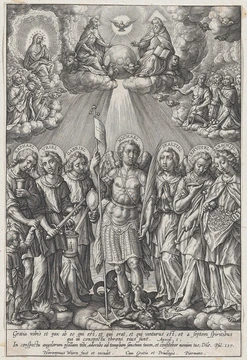
The Angel of the Presence holds significance as a figure bridging divine action and angelic mediation in early Jewish and Christian thought. The ambiguity in Isaiah 63:9—whether the entity is God or an angel—reflects broader theological debates about divine presence and agency. In Second Temple literature, the Angel of the Presence appears as a high-ranking celestial being, often associated with the angels who stand before God, such as Michael, Raphael, Gabriel, and Phanuel (in the Book of Enoch). The Second Book of Enoch identifies Uriel (also called Phanuel or Sariel) as the Angel of the Presence or one of the Angels of the Presence. This figure also connects to the concept of angels of the presence and angels of sanctification in Jubilees, created on the first day to keep Sabbath with God. The legacy of the Angel of the Presence persists in theological discussions of divine immanence and the hierarchy of angels, influencing later Christian and Jewish angelology.
Did You Know?
- The Septuagint translation of Isaiah 63:9 interprets 'angel of his presence' as God himself, not a created angel.
- In the Book of Jubilees, the Angel of the Presence explains the history of Israel to Moses but is not given a specific name.
- The Second Book of Enoch names Michael, Gabriel, Raphael, and Phanuel (or Uriel) as the Angels of the Presence, but does not equate Uriel with Phanuel or Sariel in that context, nor single out one as the Angel of the Pre
- In 1 Enoch, four angels—Michael, Raphael, Gabriel, and Phanuel—stand before the Lord of Spirits, though they are not directly called 'Angels of the Presence' in the same sense as the Isaiah passage.
Biblical Foundations and Ancient Beliefs
From the earliest pages of Scripture, angels appear not merely as one-time messengers but as persistent companions in the divine drama. They counsel, guide, and guard across both the Old and New Testaments. Psalm 91 assigns them the specific task of protecting humanity, while Jesus himself draws attention to the intimate connection between children and their heavenly guardians in Matthew 18. Luke 20 further links angelic existence to the eschatological hope of resurrection, portraying the resurrected as sharing certain qualities with angels. These scriptural threads fed into a broader ancient conversation. Greek writers such as Menander and Plutarch, along with Neo-Platonist thinkers like Plotinus, already entertained the notion of personal guardian spirits. Within the early Church, Ignatius of Antioch catalogued angelic ranks in his Letter to the Trallians, while Clement of Rome urged believers to join the angels in praising God. Clement of Alexandria went further, describing angels as forces that breathe into human thought and instill strength and sharper perception. Evagrius Ponticus framed angels as behavioral models, and Augustine of Hippo reflected on how even the angels themselves were encountering something novel as God's creation unfolded, while the good angels continually steer humanity toward worship and true happiness.
The Pseudo-Dionysian Hierarchy and Its Aftermath
Perhaps no single framework shaped Christian angelology more profoundly than the system laid out in De Coelesti Hierarchia, a treatise composed around the turn of the sixth century. Its anonymous author, writing under the name Pseudo-Dionysius the Areopagite, organized the angelic realm into three great spheres, each subdivided into three distinct orders, producing the familiar nine-rank structure that would dominate later theological discourse. The work's influence was amplified by a remarkable biographical claim: the author presented himself as a prominent figure converted by the Apostle Paul, lending the text an apostolic pedigree that made it appear far older and more authoritative than it truly was. For centuries this attribution went largely unchallenged, allowing the hierarchy to permeate liturgical practice, art, and scholastic theology. It was not until the early sixteenth century that the humanist scholar Erasmus publicly raised doubts about the text's genuine antiquity, a revelation that, while it did not dismantle the hierarchy's cultural footprint, permanently altered how scholars assessed its origins and authority.
Catholic Doctrine on Angelic Life
The Catechism of the Catholic Church treats the reality of angels not as a speculative add-on but as a defined truth of faith, grounding this conviction in both the clarity of Scripture and the unanimous witness of Tradition. Paragraph 328 makes this explicit, asserting that the existence of these non-corporeal spiritual beings is as settled in Catholic teaching as any other core doctrine. Within that framework, angels are not peripheral figures but active participants in the entire arc of human and ecclesial life. The Catechism emphasizes that from a person's first breath until the moment of death, they are enveloped in the watchful care and intercession of angelic beings, and that the Church as a whole draws sustenance from their mysterious and powerful assistance. Centrality to Christ is the defining theological note. Angels are described as belonging to Christ because they were created through Him and for Him; He stands as the very center of the angelic world. They are, in the Catechism's language, His angels, and their entire purpose is oriented around their relationship to the Incarnate Word.
Divergent Visions: Swedenborgianism and the Latter Day Saints
Two later traditions offer strikingly different pictures of what angels are and how they operate. In the Swedenborgian New Church, every angel possesses a spiritual body in human form rather than existing as a disembodied mind. They inhabit three heavens and belong to countless societies, any one of which can present itself as a single unified angel. Crucially, all angels originate from the human race; no angel in heaven was not first a person in a material body, and even children who die eventually become angels. Names like Michael, Gabriel, and Raphael denote a function rather than an individual identity. Each person is accompanied by at least two angels and two evil spirits, and the inner conflict between them produces temptation. The Latter Day Saint movement takes a different route. Here angels are messengers sent to deliver revelations, minister to people, teach salvation doctrines, and guide humanity. They are either the spirits of the dead or the not-yet-born, or humans who have been resurrected or translated into flesh-and-bone bodies. Joseph Smith taught that every angel ministering on earth belonged to it, identifying Adam as the archangel Michael, Gabriel as Noah, and Moroni as a fifth-century prophet-warrior of pre-Columbian America.
Gallery

Frequently Asked Questions
Who is the Angel of the Presence?
The Angel of the Presence (Hebrew: Mal'akh HaPanim) is a figure in both Christian and Jewish tradition that appears in Isaiah 63:9 as the means through which God delivered Israel. Depending on the tradition, it is understood either as a distinct angelic being or as another name for God himself.
Where does the Angel of the Presence appear in the Bible?
The primary biblical reference is Isaiah 63:9, which speaks of God saving his people through 'the angel of his presence.' The Septuagint Greek rendering of that verse reads the phrase as a direct title for God rather than a separate created being.
Is the Angel of the Presence a separate angel or God himself?
This is one of the central interpretive questions surrounding the figure. The Septuagint and many Christian theologians treat it as a name for God, while some Second Temple Jewish texts and later angelology traditions read it as a distinct high-ranking angelic entity.
Which named angel is sometimes identified as the Angel of the Presence?
Various traditions link the title to Uriel, Phanuel, or Michael, though no single identification is universally agreed upon. These associations surface in texts such as the Book of Jubilees, the Testament of Judah, and the Second Book of Enoch.
What role does the Angel of the Presence play?
In Isaiah 63:9 the figure acts as the agent through whom God rescues and carries Israel, essentially mediating divine salvation. In broader angelological literature the role expands to include guarding, interceding, and representing God's immediate face before humanity.
More in Angels in Christianity 1-24
Spotted an error? Know more?
This is a living reference — every entry is fact-audited, and reader corrections feed straight into our audit queue. Suggest an edit · See this site's audit record