Matthew 1:20
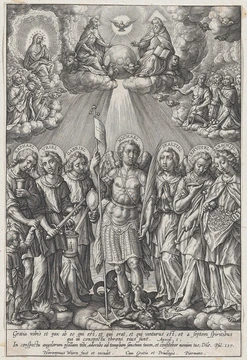
Angel reassures Joseph in a dream about Mary's pregnancy.

Matthew 1:20 is the twentieth verse of the first chapter of the Gospel of Matthew in the New Testament. In this verse, an angel appears to Joseph in a dream and reassures him after he had learned of Mary's pregnancy and had been thinking of ending their engagement. The Greek text reads: ταυτα δε αυτου ενθυμηθεντος ιδου αγγελος κυριου κατ οναρ εφανη αυτω λεγων ιωσηφ υιος δαυιδ μη φοβηθης παραλαβειν μαριαν την γυναικα σου το γαρ εν αυτη γεννηθεν εκ πνευματος εστιν αγιου. In the King James Version, the verse says: "But while he thought on these things, behold, the angel of the LORD appeared unto him in a dream, saying, Joseph, thou son of David, fear not to take unto thee Mary thy wife: for that which is conceived in her is of the Holy Ghost." The World English Bible renders it: "But when he thought about these things, behold, an angel of the Lord appeared to him in a dream, saying, 'Joseph, son of David, don't be afraid to take to yourself Mary, your wife, for that which is conceived in her is of the Holy Spirit.'" Other versions can be found at BibleHub Matthew 1:20.
This is the first of four dreams Joseph experiences in Matthew. Unlike Old Testament dreams, these are straightforward and require no interpretation. Albright and Mann note that the Greek word *angelos* can mean either "angel" or a generic divine messenger, and the angel here does not appear as a human-like being in the physical world, as is more common. The angel addresses Joseph as "son of David," which E. H. Plumptre calls significant "in the highest degree," emphasizing Jesus' legal Davidic status, consistent with the genealogy in Matthew 1:1-17. The phrase "take Mary as your wife" refers to the second stage of Jewish marriage, when the bride moves into the husband's house; the Greek text and the rest of the chapter make clear this is not a euphemism for sexual relations.
Why Joseph should "fear" to take Mary is a key question. Gundry argues that if Joseph suspected adultery, he would not be afraid; instead, he likely already knew of the Virgin Birth and feared angering God by interfering with the divine plan. This aligns with Luke, where Mary has been informed about her pregnancy earlier. Boring notes that "do not be afraid" is a standard angelic opening in the Bible, appearing also in Genesis 21:17, Matthew 28:5, Luke 1:13, Luke 1:30, and Revelation 1:17. The term "Holy Spirit" here, as i
- book
- Gospel of Matthew
- chapter
- 1
- verse
- 20
- subject
- Joseph's dream and angelic message
- language
- Greek (original)
- key_phrase
- fear not to take unto thee Mary thy wife
Lore & Background
In the Greek text, the verse reads: 'ταυτα δε αυτου ενθυμηθεντος ιδου αγγελος κυριου κατ οναρ εφανη αυτω λεγων ιωσηφ υιος δαυιδ μη φοβηθης παραλαβειν μαριαν την γυναικα σου το γαρ εν αυτη γεννηθεν εκ πνευματος εστιν αγιου.' The King James Version renders it: 'But while he thought on these things, behold, the angel of the LORD appeared unto him in a dream, saying, Joseph, thou son of David, fear not to take unto thee Mary thy wife: for that which is conceived in her is of the Holy Ghost.' The World English Bible translates similarly, using 'Holy Spirit' instead of 'Holy Ghost.'
This is the first of four dreams of Joseph recorded in Matthew. Unlike Old Testament dreams, these are straightforward with no interpretation required. The angel refers to Joseph as 'son of David,' emphasizing Jesus' legal Davidic status, consistent with the genealogy in Matthew 1:1-17. The phrase 'take Mary as your wife' refers to the second stage of Jewish marriage, where the bride moves into the husband's house, and is not a euphemism for sexual relations.
Reader's Guide
Matthew 1:20 is significant for establishing the divine nature of Jesus' conception and Joseph's role in the nativity narrative. The verse introduces the motif of angelic dreams in Matthew, which are direct and require no interpretation, contrasting with Old Testament dream accounts. The address 'son of David' reinforces Jesus' legal lineage, a key theme in Matthew's genealogy. The angel's command 'fear not' is a standard biblical angelic opening, appearing also in Genesis 21:17, Matthew 28:5, Luke 1:13, Luke 1:30, and Revelation 1:17. The term 'Holy Spirit' here refers to a divine spirit in general, not the specific Trinitarian concept developed later. The Greek word for 'conceived' (γεννηθεν) does not specifically mean biological conception, leading some scholars like Jane Schaberg to argue the verse does not rule out a human biological father, as the same verb is used elsewhere for Isaac and Christians. The verse thus preserves uncertainty about the exact nature of Jesus' conception, as noted in the source article.
Did You Know?
- This is the first of four dreams of Joseph recorded in Matthew.
- The Greek word 'angelos' could mean a generic divine messenger, not necessarily a winged being.
- The phrase 'fear not' is a standard angelic opening line in the Bible, appearing in multiple other verses.
- The word translated as 'conceived' (γεννηθεν) does not specifically mean biologically conceived.
More in Angels in Christianity 1-24
Spotted an error? Know more?
This is a living reference — every entry is fact-audited, and reader corrections feed straight into our audit queue. Suggest an edit · See this site's audit record